
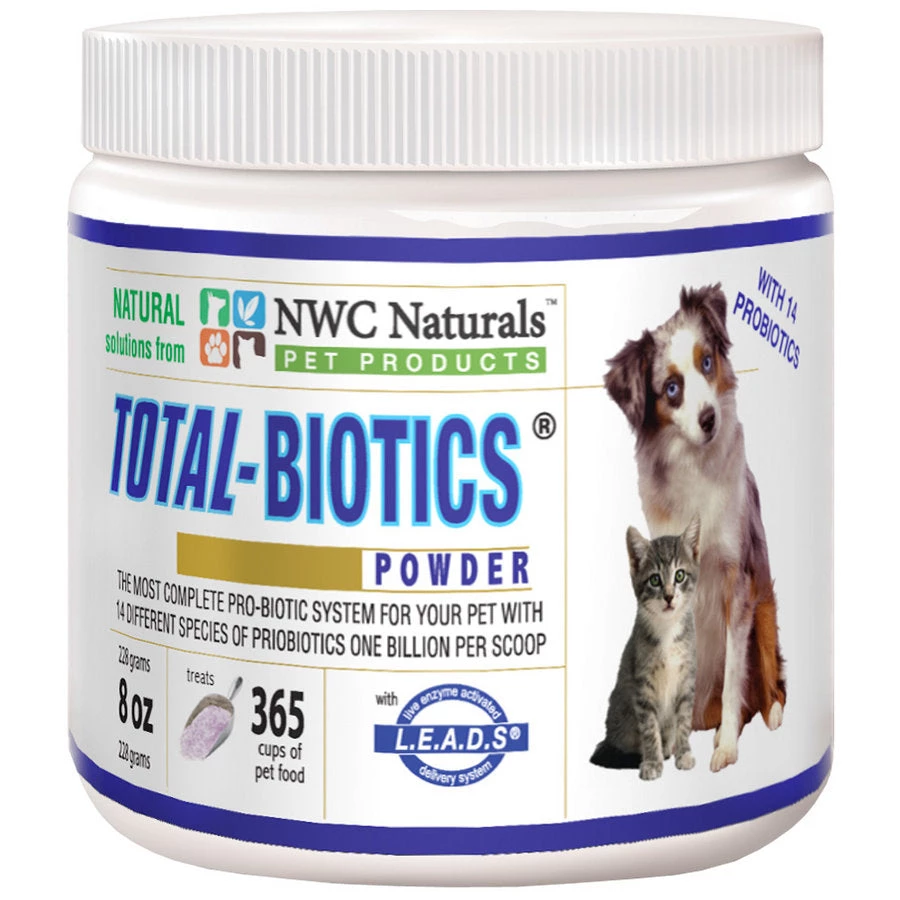
Furly’s Pet Supply Total-Biotics Probiotic Powder Dog
Original price was: $24.99.$17.74Current price is: $17.74.
- fast shipping
- Safe Transactions, Always
- Your questions, our prompt answers.
- Shop the Best Quality Online

Acidophilus: Acidophilus is the most effective pro-biotic strain. Called the “sticker strain,” Acidophilus has the ability to actually cling to the intestinal wall without harming it. In fact, it is best known for its ability to move un-disrupted through the stomach and into the intestines where it eats away at the bad bacteria. It is known for reducing the occurrence of constipation and diarrhea, increasing nutrient uptake (especially calcium).
B. bifidum: Is a normal inhabitant of the intestines. Found in large numbers, the numbers of bifidobacteria decrease with age. B. bifidum helps detoxify the intestines and promote regular bowel movements.
Bacillus coagulans: Has been added by the EFSA to their Qualified Presumption of Safety (QPS) list] and has been approved for veterinary purposes by the U.S. Food and Drug Administration’s Center for Veterinary Medicine, as well as by the European Union and is listed by AAFCO for use as a direct fed microbial in livestock production. It is often used in veterinary applications, especially as a probiotic in pigs, cattle, poultry, dog and cats.
L fermentum: is a Gram-positive species of bacterium in the genus Lactobacillus. it is a probiotic that supports the immune response, supports liver health and cholesterol levels.
B. lactis (B. animalis): is a Gram-positive anaerobic rod-shaped bacterium, which can be found in the large intestines of most mammals, including humans. Bifidobacterium animalis and Bifidobacterium lactis were previously described as two distinct species. Presently, both are considered B. animalis with the subspecies Bifidobacterium animalis subspecies animalis and Bifidobacterium animalis subspecies lactis. Both names B. animalis and B. lactis are still used on product labels, as this species is frequently used as a probiotic in pet products.
B. longum: Aids in the cleansing and health of the colon and liver.
L. brevis : is a species of lactic acid bacteria, all of which are Gram-positive, non spore forming organisms whose main metabolic pathway involves fermenting hexose sugars to produce lactic acid. L. brevis can be isolated from the food sources in inhabits, one example being kimchi. This bacteria is probiotic, and supports the immune system.
L. casei: Is known for its ability to support a healthy immune response that is helpful in supporting a healthy urinary tract.
L. plantarum: Can be found in naturally fermented foods. It is found in the large intestine where it helps to break down protein into usable nutrients.
L helveticus: Is gaining also importance as health-promoting culture in probiotics. It has the potential to produce bioactive peptides or bacteriocins, and exert symbiotic effect when associated with prebiotics.
Lactococcus lactis: Has been shown through research to produce a high amount of lactic acid, which is able to support a good gut and a normal intestinal flora.
L. reuteri: Provides natural probiotic support for the intestines. Is a well-studied probiotic bacterium that can colonize many mammals.
E. faecium: Provide several benefits to a pet including aiding digestion and helping to maintain a healthy mix of bacteria in the stomach (which can be helpful when switching diets or after anti-biotic treatment).
L. Bulgaricus: Is one of several bacteria used for the production of yogurt. It is also found in other naturally fermented products.
| Size | 2.22oz, 8oz |
|---|
Be the first to review “Furly’s Pet Supply Total-Biotics Probiotic Powder Dog”
Related products
Canned Food

Canned Food

Reviews
There are no reviews yet.